

Written by Claire Bailey, 2026/27 Arts Fundraising and Philanthropy Fellow, and Development Officer at the Royal Albert Memorial Museum & Art Gallery
When I secured one of the ten spaces on this year’s Arts Fundraising and Philanthropy’s Fellowship, in partnership with Cause4 and the University of Leeds, I was very pleased with myself. For a couple of days, I walked around with a big grin on my face, and then it hit me…I was going to have to do academic study. I finished university 26 years ago – how was I going to do this on top of the day job? I was going to have to be critical, analytical and give evidence for my arguments.
I was going to have to be vulnerable; in our arts fundraising worlds we are often trying to tell a positive story, (who wants to support decline?), and I was going to have to be honest – not just with my fellow students and tutors, but also with myself.
The first residential
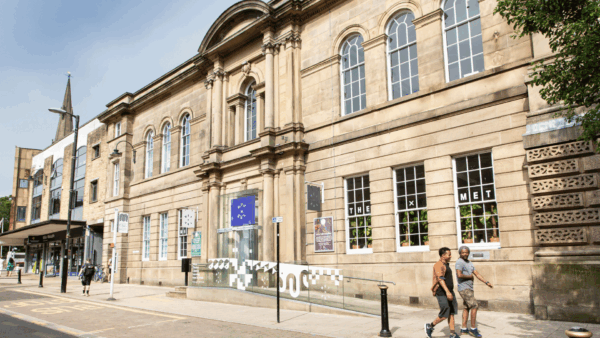
In September, I spent three days in Leeds at our first residential. It was thought-provoking, challenging, inspiring, and I could feel my shoulders moving away from my ears.
I fundraise for a Local Authority governed museum and art gallery. Here’s me doing a bit of that honesty I mentioned – it can be challenging. Budget cuts, competition for funding, changing senior roles, Local Authority reorganisation, multiple and changing expectations of audiences and stakeholders, and an ingrained need to support our communities, knowing they need more support than ever.
I know many of these challenges will chime with your situations too. It can feel like you are on a treadmill of flux; you’re working hard and hankering after the good old days that felt stable, where you knew where you were and where you were going.
My learning at the residential felt like an epiphany. My friend, those days are gone!
My first epiphany
‘In order that things stay the same, everything must change’.
The di Lampedusa principle, which was introduced to me at the residential in a lecture on Managing Change in Arts Fundraising by Dr Alison Andrews, suggests that to keep things how they are, you must accept change. Its name is derived from Il Gattopardo (The Leopard), a book by the Italian novelist Giuseppe Tomasi di Lampedusa, where the principle is expressed in the famous line, ‘If we want things to stay as they are, things will have to change.’
So, my first moment of acceptance was that this more stable place I used to inhabit, which had been alluding me despite my sprinting on the treadmill, was not because of a failure of mine or my organisation, it was because it just doesn’t exist anymore.
How was I now going to make this new, ever-changing landscape somewhere I could live and somewhere where my organisation’s audiences, stakeholders and supporters would want to come and spend time too?
Thought-provoking, challenging and inspiring sessions
At our residential, we covered Fundraising in the Current Context with Annie Jarvis, Leadership with Dr Jonathan Price, Resilience with Mark Robinson and Change with Alison Andrews. We began to put words, theories and models in place that might support this new world.
The aforementioned treadmill of flux required a new lens, which came from James Marriott who was quoted in Douglas & Freemantle 2009 and introduced to me in Dr Jonathan Price’s lecture on Arts Fundraising and Leadership: “First… the wheel turns constantly and it just repeats itself; it is moving around – a cycle of whatever you want to call it, seasons or days or livelihoods – in a sense it is going nowhere, but going around….but, at the same time, if the wheel turns, then it moves across a landscape. There are two things happening at the same time. The first…requires the imagination of perseverance…the other one, which is the question of where it is going, requires the imagination of direction finding.”
As I visualised this concept, I couldn’t help but think that perhaps there was another element missing: the tyre and its tread – if we are to keep moving forwards, this too needs attention – and it is our teams that will need to provide such traction.
How will the team need to be shaped? How should it be led? What do they need to thrive?
Perhaps we need to better embrace leadership that is democratic, where power is distributed between leaders and staff members, and participative, as Canon suggests, where others are involved in decision making, or, as Peacock argues, we need to explore Emergent change models.
Time for reflection and planning
I don’t have all the answers yet, (the reading list awaits), but I’m hoping for more ideas and clarity as me and my fellow cohort move through this PG Cert. It will certainly provide space for reflection – a rare commodity for many of us, and it will open up established tools, methodologies and concepts that will support moving that wheel forwards through a new landscape; being able to change the tyres when we need to.
If I succeed, I may even attend my graduation. First time round, being a radical art student, I was far too cool for that. I already know that this leopard can change their spots, and you can too if that’s what’s needed.
If we want our organisations to continue to thrive, be accessible, inclusive, relevant, thought-provoking, responsive, inspiring and fun in the future, we’re going to have to change everything, and maybe that isn’t as scary as we might think.
About the author...

Claire Bailey
You may also like...
What Devolution Means for the Future of Arts Fundraising

