

Devolution will change not simply who funds culture but the context in which investment decisions are made. But, as Michelle Wright of Cause4 argues, there are significant risks.
Fundraisers are trained to look for opportunities. Which trusts are open? When is the next Arts Council England deadline? What corporate prospects are in the pipeline?
These things remain important. But as devolution reshapes where decisions are made and how investment flows across England, arts and cultural fundraisers increasingly need to understand where investment priorities sit across places and regions.
Devolution will change not simply who funds culture, but the context in which decisions about cultural investment are made. As culture becomes embedded alongside economic growth, regeneration, skills, tourism, health and place, fundraising will require a different mindset.
For many arts organisations that have built effective local authority partnerships over many years, this is already a stressful time. The emerging landscape is unclear: local government reorganisation means responsibilities are moving, established relationships may no longer exist, and some of the people that organisations have traditionally worked with in local authorities are in transitional roles.
At the same time, organisations face a new challenge: how to translate cultural impact into the language of economic and place-based funders, often without the data, skills or capacity to do so.
A new funding landscape
Good fundraising has always started with understanding the priorities of the funder or donor.
An arts organisation might naturally describe itself through the quality of its artistic work, its audiences or participation programmes. A strategic or combined authority may view that same organisation through a much wider lens. What does it contribute to the local economy? Does it attract visitors, create jobs or develop skills? Does it contribute to regeneration, health or the attractiveness of a place?
The intrinsic case for culture remains important: arts, heritage and creative expression have inherent value independent of their economic return. Culture’s formal place in the new devolution framework gives the sector an important opportunity to make that case, particularly against a backdrop of long-term deterioration in local authority cultural funding.
But funding remains under enormous pressure. Culture continues to face the challenge of instrumentalism – the expectation that it must serve an external economic or social purpose to justify investment.
An organisation that can demonstrate its contribution to GVA growth, tourism, skills or health outcomes may inevitably be better placed to secure investment from a cash-strapped local authority than one relying solely on the intrinsic value of culture.
Of course, the sector should resist a future in which artistic or cultural value becomes impossible to fund without an economic or social return. But treating culture as an alternative to economic growth is equally unlikely to succeed.
Instead, arts organisations need to get much better at articulating where culture genuinely intersects with the wider ambitions of a place. That doesn’t mean pretending to be something we are not. One of the least helpful consequences of funding pressure is mission contortion – organisations repeatedly reshaping their work to match whichever funder happens to hold the money.
Good fundraising isn’t about inventing relevance. It is about identifying it. The task is to find the authentic intersection between what an organisation exists to do and what its place is trying to achieve – and then find proportionate ways of evidencing that contribution.
From chasing funds to building partnerships
There is a familiar pattern in fundraising. A funding opportunity appears, fundraisers read the criteria and then work out which part of their organisation’s programme fits. But that can encourage organisations to become reactive – developing projects around funding opportunities, rather than developing funding around what they actually want to achieve.
Place-based funding requires a different set of questions. What does our place need? What can our organisation genuinely contribute? And who else has an interest in making that happen?
This means building investment around shared ambitions and partnering strategically with organisations both within and beyond culture. Emerging examples of match funding, such as in the West Midlands, indicate what might be possible: bringing public investment together with philanthropy and other funding to increase the resources available for creative projects.
There is scope to think much more ambitiously about these models. The prize from devolution should not simply be redistributing existing cultural funding but finding ways to grow the overall investment available to culture.
The risk of unequal devolution
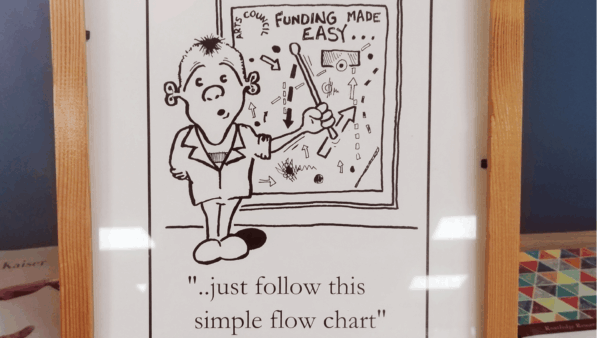
Of course, there are significant risks in the funding models for devolution. Some strategic authorities will be economically stronger than others and will have capacity to deliver at scale. Some will already have sophisticated cultural strategies and relationships with the sector; elsewhere, arts and culture will be a much newer area of focus. There is a genuine danger of a new postcode lottery.
But there is another inequality too.
Government is potentially creating a more sophisticated, relationship-driven, place-based funding environment at precisely the point when many arts organisations have less capacity to engage with it.
Those most able to attend strategic meetings, develop partnerships, produce economic-impact data and cultivate relationships with mayors and officials are often larger, better-resourced organisations. There is therefore a real danger that devolution rewards capacity to engage with the system, rather than necessarily the organisations creating the greatest cultural or community value.
Decision-making may move closer to place, while remaining furthest away from the organisations with the least capacity to influence it.
What can smaller organisations do?
The answer cannot simply be for smaller arts organisations to devote more time to strategic engagement. For many, that capacity doesn’t exist. Instead, organisations will need to engage collectively and selectively. Local cultural networks, consortia and sector bodies can represent smaller organisations, share intelligence and ensure their contribution is visible in strategic conversations.
Individual organisations can focus limited capacity on the one or two relationships that matter most; work with partners to develop shared evidence; use trustees and supporters to extend networks; and form consortia where that opens opportunities otherwise beyond their reach.
There is also growing recognition of the need to help cultural organisations build the evidence required in a devolved landscape. Tees Valley Combined Authority, for example, has developed an economic evidence base for its cultural and creative industries to position the sector within wider regional economic development.
And smaller organisations don’t need to evidence everything. The goal should be to develop proportionate evidence of genuine relevance, rather than having to demonstrate contribution to every economic and social outcome.
Connecting interests: the fundraiser’s role
Perhaps the biggest shift for fundraising is about relationships.
Place-based investment is less linear than a traditional identify funder, cultivate funder, make ask model. Organisations already working successfully with combined authorities, such as The Met in Bury, demonstrate that relationships can take years to develop.
Yet those relationships are currently difficult to navigate. Responsibilities are shifting and new structures are still taking shape. But that doesn’t mean that organisations should wait.
Even without knowing exactly who will hold a particular budget, they can understand local growth plans, regional economic strategies and emerging priorities, build relationships across local government, business, universities and the voluntary sector, and gather evidence about the contribution they make. If the first time an important regional stakeholder hears from an organisation is when it asks them for money, it may already be too late.
Of course, none of this relationship building can sit solely with fundraising teams. Chief executives, trustees, artistic leaders, finance teams and communications colleagues all have a role to play. But fundraisers possess a particular skill that becomes increasingly valuable in this environment: the ability to connect interests.
Fundraisers understand how to listen to what a potential partner is trying to achieve, identify what their organisation can genuinely contribute, and build a proposition in which both sides see value. In a devolved funding landscape, that ability to connect interests – between culture and place, mission and investment, organisations and partners – may become one of the most important fundraising skills of the next decade.
About the author...

Michelle Wright
You may also like...
In Order for Things to Stay the Same, Everything Must Change

Risks, reputation and fundraising: Have we lost confidence in decision making?
